
The governments perpetual inability to set its own house in order has not only cost India crucial foreign investment but has also damaged the perception about India's ability to play a larger role in global politics, says Harsh V Pant.
India is a major power today in its own right. While much of the world has started to acknowledge it, Indian policy-makers remain diffident, almost apologetic, about their nation's rising profile, writes Harsh V Pant.
'With China investing in Iran's energy sector, India cannot afford to lag behind.'
In the short to medium term India's scarce resources would be better served by focusing on reducing the disparity with China in space. Developing ASAT capability is something that can wait, write Bharath Gopalaswamy and Harsh V Pant.
At a time when China's bullying behaviour has been evident in its actions and pronouncements, India is signalling that it is ready to emerge as a serious balancer in East Asia and Southeast Asia, says Harsh V Pant.
India must create firm ties among the energy exporting states of central Asia, particularly Kazakhstan, Uzbekistan, and, if possible, Turkmenistan, says Harsh V Pant.
Just as Pakistan will be fooling itself if it believes that US Secretary of State John Kerry is going to be Pakistan's friend, India is being unnecessarily defeatist if it thinks that Kerry's nomination will be a disaster for India. Kerry is neither going to be pro-India nor pro-Pakistan, he will be pro-US, says Harsh V Pant.
This should have been India's moment to lead the way. But the Indian story seems to be over even before it began, says Harsh V Pant.
If China can operate in India's backyard and systematically expand its influence, then there is no reason why India should feel diffident about operating in areas that China considers its own sphere of influence, argues Harsh V Pant as the Asia Security Summit convenes in Singapore.
Indian policy makers would be well advised to disabuse themselves of the notion of a Sino-Indian convergence in managing Pakistan. China doesn't do sentimentality in foreign policy, India should follow suit, says Harsh V Pant
As India has moved away from Iran, it has moved closer to Saudi Arabia with the help of the US, says Harsh V Pant
India cannot be expected to ignore its genuine interests in Afghanistan just to keep Pakistan in good humour. While for Afghanistan, the pact is a way of trying to deal with an increasingly more menacing Pakistan, says Harsh V Pant.

The Conservatives have been clear about India being a priority for the UK since David Cameron's visit to India in 2006. This sentiment was reflected in the queen's address to the British parliament last month where she laid out the new government's agenda of working 'to establish a new 'special relationship' with India'. This was significant because no other country, not even the US, was mentioned by name.
With his visit to Saudi Arabia, Dr Singh has re-emphasised that when it comes to the Gulf, Iran will not be the focus of Indian foreign policy.

Joe Root and Jonny Bairstow slammed majestic centuries as England pulled off their highest-ever successful run chase in the longest format for a convincing seven-wicket win over India in the rescheduled fifth Test in Birmingham on Tuesday.
'India is threatened much more than the US by the return of the Taliban to Afghanistan.'
An India-Japan civil nuclear pact would be critical in signalling that they would like to build a partnership to bring stability to the region at a time when China is going all out to reward Pakistan with civilian nuclear reactors, says Harsh V Pant.

Overpower Sri Lanka by 144 to claim title
Tehran continues to be hyper-critical of the Indian government on Kashmir, even forcing New Delhi to issue a demarche last year as a protest against Iranian interference in Indian domestic issues. Iranian interference in Indian domestic politics has been going on for a long time with sections of the Indian government suggesting that Iran 'has been buying off journalists, clerics and editors in Shia-populated areas of UP and Kashmir,' says Harsh V Pant.
The reach of China in other South Asian states has been extraordinary. India's protectionist tendencies have allowed China to don the mantle of regional economic leader. The sooner Indian policy makers realise this and take steps to redress this the better, writes Harsh V Pant
India cannot continue with its ultra cautious stand on Afghanistan for much longer given the faster than expected reduction of the military footprint by the Western powers, says Harsh V Pant.
India will have to seriously think about its role anew as a new Iraq emerged in a new Middle East. Appointing an ambassador is a good, albeit modest, start, says Harsh V Pant.
The US-China-Pakistan 'axis' was India's biggest headache during the Cold War years. Unless managed carefully, a Russia-China-Pakistan 'axis' may emerge as an even bigger one in the coming years, says Harsh V Pant.
When External Affairs Minister S M Krishna underscored the folly of making a distinction 'between good Taliban and bad Taliban' at the Afghanistan Conference in London earlier this year, he was completely out of sync with the larger mood at the conference. As a result, Indian diplomacy faced a major setback when Indian concerns were summarily ignored.
India is right to forcefully reject Chinese claims of sovereignty over the entire South China Sea. It should now build credible strategic partnerships with other regional states so as to prevent a Chinese regional dominance, says Harsh V Pant.
India needs to be aware of the potentially-catastrophic implications of the collapse of governing authority in Pakistan. A boost to fundamentalist forces in the neighbourhood will have some serious consequences for the utility of nuclear deterrence in the sub-continent, says Harsh V Pant
India should have the self-confidence to engage Iran on its own terms and on the basis of a clear understanding of its national interests, says Harsh V Pant
Harsh V Pant says leakage of Pakistan's nukes is a bigger worry than the number of warheads in its arsenal.
India needs to be aware of the potentially catastrophic implications of the collapse of governing authority in Pakistan and the possibility of its nuclear assets falloing in the wrong hands, writes Harsh V Pant.
Instead of ignoring Delhi, the West would be better served if it ceases to pander to Pakistan for short-term gains. Not supporting the only secular liberal democracy in the region will only embolden the radical Islamists in the long-term, writes Harsh V Pant.

'The missile mounted near Kailash-Mansarovar is called DF-21. It is a medium-range, 2,200 kilometres ballistic missile. Its advantage is that it can cover all cities of north India, including New Delhi'

The road to negotiations in Afghanistan will be a very difficult given all the domestic and regional stakeholders who will need to be reassured. And New Delhi will have to prepare itself for making some tough choices in the coming days. The days of merely relying on 'soft power' in Afghanistan are well past their sell by date, says Harsh V Pant.
China's new naval strategy of 'far sea defence' is aimed at giving Beijing the ability to project its power in key oceanic areas, including and most significantly the Indian Ocean. China has fired the first salvo. Others will have to react seriously if they want to retain their role in the region, says Harsh V Pant.

'India-China economic ties are likely to take a hit in the wake of the new situation, but that also provides India with a new opportunity to strengthen its manufacturing base,' points out Dr Rajaram Panda.

The stagnation in US-Russia relations does not augur well for New Delhi's strategic interests, says Harsh V Pant and Raj Kumar Sharma.
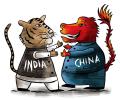
'China's vulnerability on the global stage has given an opening to India to push for its own interests,' notes Harsh V Pant.
America's Asia-Pacific policy will come unhinged without Indian support and Indian desire to effectively balance China will remain just that, a desire, without American support, feels Harsh V Pant.

David Warner (4 off 12), returning to the franchise where he made his IPL debut back in 2009, struggled in his first innings of the season.
The reality is that Indian defence modernisation is lagging behind and the government and the present defence minister is largely responsible for the sad state of affairs today in the military realm.
New Delhi will have to fashion a pro-active foreign policy response that relies less on Washington in crafting an appropriate response to the changing dynamic in Af-Pak, says Harsh V Pant.
